


The Philippines has emerged as a global leader in IT services and business process outsourcing (BPO), with over 1.5 million professionals serving clients worldwide. As competition intensifies and clients demand higher quality standards, CMMI 2.0 certification has become a critical differentiator for Philippine companies seeking to demonstrate process maturity and operational excellence.
If you’re an IT service provider or BPO organization in the Philippines seeking CMMI 2.0 certification, this comprehensive guide will walk you through everything you need to know about maturity levels, appraisal stages, documentation requirements, timelines, and the strategic benefits for your business.
Understanding CMMI 2.0 Maturity Levels
The Capability Maturity Model Integration (CMMI) 2.0 framework provides a structured pathway for organizations to improve their processes systematically. Unlike its predecessor, CMMI 2.0 offers greater flexibility and focuses on performance outcomes rather than prescriptive practices.
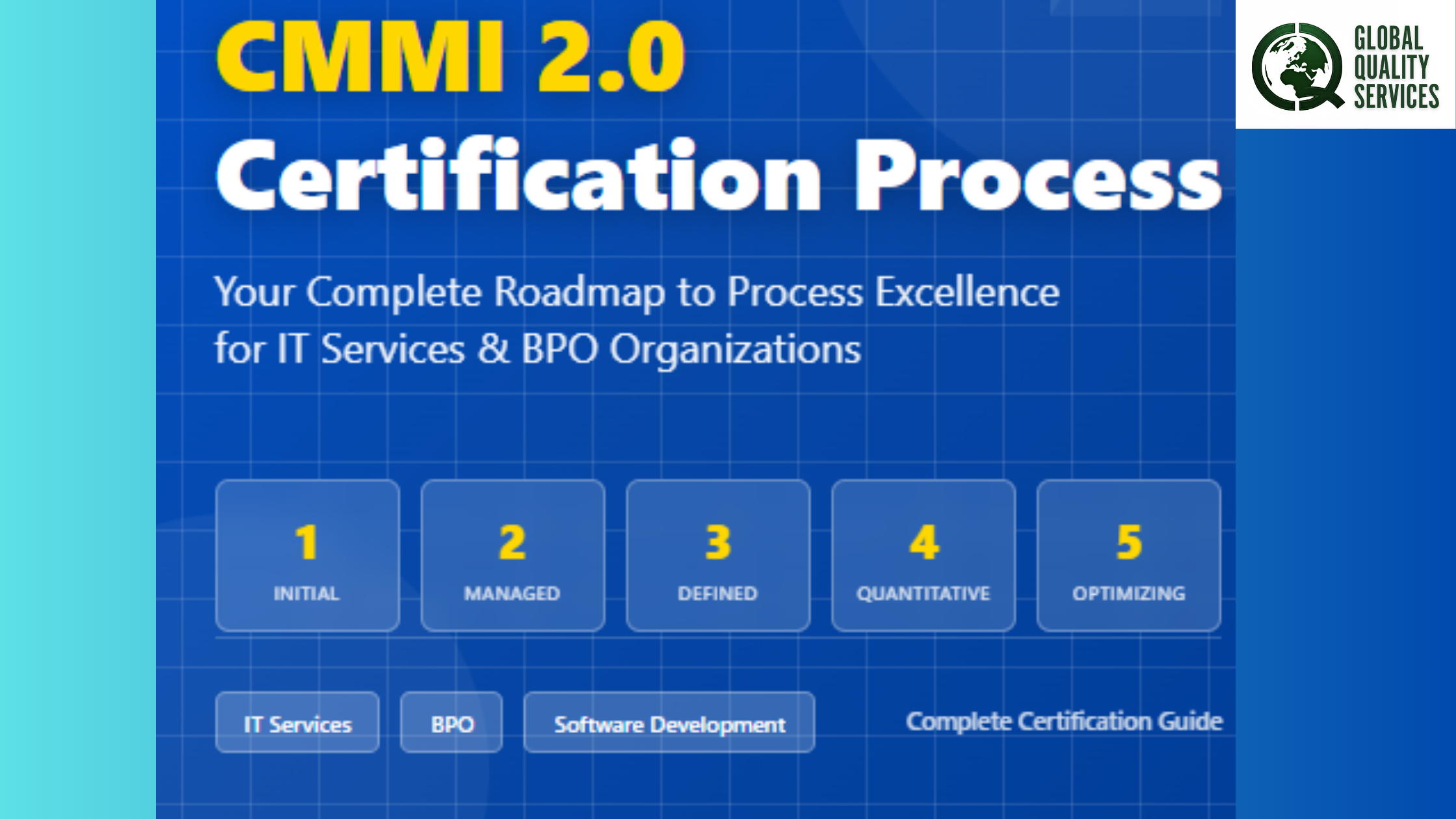
The framework defines five maturity levels that represent progressive stages of process improvement. At Level 1, organizations have unpredictable processes with inconsistent results. Level 2 introduces managed processes where projects are planned and executed according to documented procedures. Level 3 represents defined processes that are standardized across the organization and proactively managed. Level 4 organizations achieve quantitatively managed processes with measurable performance objectives. Finally, Level 5 represents the optimization of processes, with continuous improvement embedded in the organizational culture.
Most Philippine IT and BPO companies begin their CMMI journey targeting Level 3, which demonstrates process standardization and predictability that global clients expect. However, the choice of target level depends on your business objectives, client requirements, and competitive positioning.
The CMMI Appraisal Process: What to Expect
Achieving CMMI 2.0 certification requires completing a formal appraisal conducted by a CMMI Institute-authorized Lead Appraiser. The Standard CMMI Appraisal Method for Process Improvement (SCAMPI) is the official appraisal method used to determine your organization’s maturity level.
The appraisal process typically unfolds in several distinct stages. During the planning phase, you’ll work with your Lead Appraiser to define the appraisal scope, select organizational units to be appraised, and establish the appraisal schedule. This phase usually takes two to four weeks depending on organizational complexity.
The preparation stage involves extensive readiness activities where your organization gathers evidence, conducts gap analyses, and implements process improvements. This is typically the longest phase, often requiring six to twelve months for organizations pursuing their first certification.
The appraisal execution phase involves on-site or virtual activities where the appraisal team examines documentation, interviews staff members, and validates process implementation. For a SCAMPI A appraisal (the official rating method), this typically requires three to five days of intensive evaluation.
Finally, the reporting phase culminates in findings presentation, where the Lead Appraiser shares results, identifies strengths and weaknesses, and issues the official maturity level rating if your organization meets the requirements.
Essential Documentation for CMMI Certification
Documentation serves as the primary evidence of your process implementation and forms the foundation of your appraisal. Philippine organizations should prepare several critical document categories to demonstrate CMMI compliance.
Process documentation includes your organizational process assets such as process descriptions, templates, checklists, and guidelines that define how work gets done. Project documentation encompasses project plans, status reports, risk registers, change requests, and other artifacts demonstrating process execution at the project level. Quality assurance records provide evidence of process compliance monitoring, audit findings, and corrective actions. Measurement data demonstrates your organization’s ability to collect, analyze, and use metrics for decision-making.
Training records verify that staff members have received appropriate process training and understand their roles. Management review minutes document senior leadership engagement in process improvement initiatives. Many Philippine companies leverage quality management system documentation prepared for ISO 9001:2015 certification as a foundation for CMMI compliance, since these standards share common quality principles.
Additionally, organizations in the BPO sector may reference compliance with the Data Privacy Act of 2012 (Republic Act No. 10173) when documenting information security practices, creating potential hyperlink opportunities for related content on your website.
Timeline Expectations for Philippine Organizations
The journey to CMMI 2.0 certification varies significantly based on your organization’s starting point, target maturity level, and resource commitment. However, Philippine IT and BPO companies typically follow predictable timelines.
Organizations with no prior CMMI experience pursuing Level 3 certification should expect twelve to eighteen months from project initiation to final appraisal. This timeline includes initial gap assessment, process definition and implementation, pilot testing, organization-wide rollout, and final appraisal preparation.
Companies with existing quality management systems like ISO 9001 or those upgrading from CMMI 1.3 to version 2.0 may complete the certification in eight to twelve months. Organizations pursuing Level 2 as an intermediate step can often achieve certification within six to nine months.
Critical success factors that accelerate timelines include strong executive sponsorship, dedicated process improvement teams, experienced CMMI consultants familiar with Philippine business contexts, and realistic scope definition that focuses on core business processes.
Strategic Benefits for Global Clients
CMMI 2.0 certification delivers tangible advantages for Philippine service providers competing in the global marketplace. International clients, particularly from North America, Europe, and Australia, increasingly require CMMI certification in their vendor selection criteria, viewing it as assurance of process discipline and delivery predictability.
Certified organizations typically experience fifteen to twenty-five percent reduction in project defects, ten to twenty percent improvement in schedule adherence, and measurable gains in customer satisfaction scores. These performance improvements translate directly to competitive advantages in contract renewals and new business acquisition.
The certification also enhances your organization’s positioning for government contracts, particularly with US federal agencies that reference CMMI in procurement requirements. Philippine companies serving regulated industries like healthcare, financial services, and telecommunications find that CMMI certification facilitates compliance with client-mandated quality standards.
Beyond market access, the process improvement journey itself builds organizational capabilities in measurement, analysis, risk management, and continuous improvement that create lasting competitive advantages regardless of specific client requirements.
Take the Next Step Toward CMMI Excellence
Ready to elevate your organization’s process maturity and unlock new business opportunities through CMMI 2.0 certification? The journey begins with understanding your current state and creating a realistic roadmap aligned with your business objectives.
Contact our CMMI experts today for a complimentary gap assessment and learn how we can guide your Philippine organization through every stage of the certification process. Our team has successfully supported dozens of IT and BPO companies across Metro Manila, Cebu, and Davao in achieving their CMMI goals.
Schedule your free consultation with Global Quality Services now to discover how CMMI 2.0 can transform your operational excellence and client relationships.
Frequently Asked Questions
How much does CMMI 2.0 certification cost in the Philippines?
Certification costs vary based on organization size, target maturity level, and whether you use external consultants. Expect investments ranging from PHP 2-5 million for small to medium organizations, including consulting fees, appraisal costs, training, and internal resource allocation.
Is CMMI certification mandatory for Philippine BPOs?
No, CMMI certification is voluntary. However, many global clients require or strongly prefer certified vendors, making it a practical necessity for companies serving enterprise clients in competitive markets.
How long does CMMI certification remain valid?
CMMI appraisal results are typically valid for three years. Organizations should maintain continuous improvement efforts and consider re-appraisal before expiration to maintain their certified status.
Can we achieve CMMI certification while working remotely?
Yes, the CMMI Institute adapted appraisal methods to support virtual assessments, allowing Philippine organizations to pursue certification even with distributed teams or remote work arrangements.


