

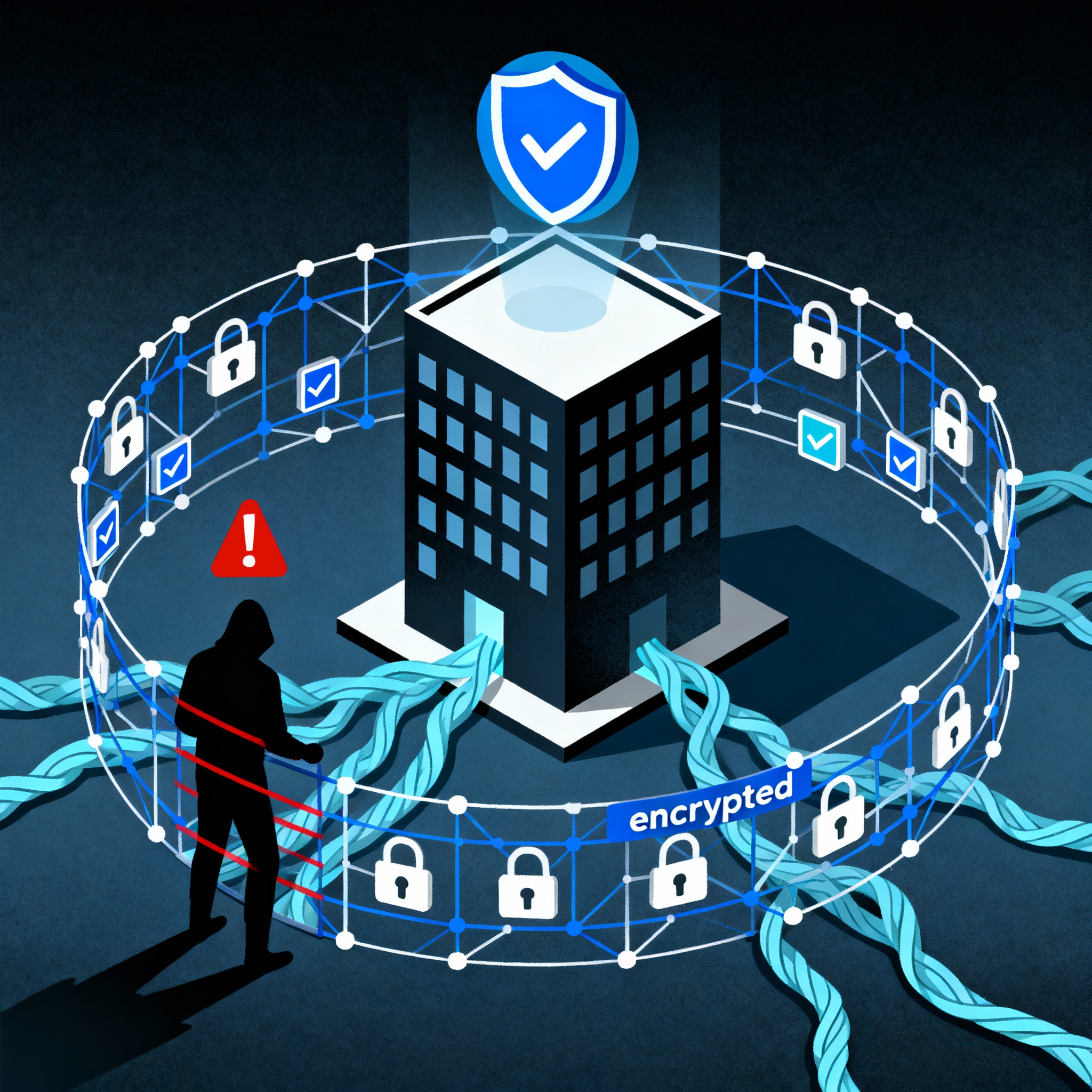

Businesses run on data — customer records, financial information, trade secrets, and operational systems. But as data grows in volume and value, so do cyber threats. A single breach can disrupt operations, erode customer trust, and result in significant financial losses. That’s why implementing strong cybersecurity measures has become a business necessity, not an option.
Below, we explore how cybersecurity protects modern organizations from data breaches, the types of threats to watch for, and the measures that keep digital assets safe.
Understanding Cybersecurity for Businesses
Cybersecurity refers to the practices, technologies, and processes used to protect computer systems, networks, and data from unauthorized access, attacks, or damage. For businesses, cybersecurity goes beyond IT — it’s a critical component of risk management and business continuity.

Whether a company is a small enterprise or a large corporation, the threats remain the same: data theft, ransomware, phishing scams, and insider misuse. The difference lies in preparedness. Robust cybersecurity strategies ensure that sensitive information is secured, employees are vigilant, and systems are resilient enough to withstand or recover from attacks.
Investing in cybersecurity also helps businesses build credibility. Clients and partners are more likely to engage with companies that prioritize data protection, particularly in industries such as finance, healthcare, and e-commerce.
Common Types of Cyber Threats
Cybercriminals are constantly evolving their tactics, often exploiting human error or technical loopholes. Understanding common types of threats is the first step toward effective defense.
Phishing and Social Engineering
Phishing remains one of the most prevalent and dangerous threats. It involves deceptive emails, messages, or websites that trick employees into revealing sensitive data such as login credentials or payment details. Social engineering takes this further — manipulating human psychology to gain access to systems or information.
A single employee clicking a malicious link can compromise an entire network, giving attackers the foothold they need to steal data or install malware. Regular awareness training and strict email security protocols are vital to prevent such incidents.
Malware and Ransomware Attacks
Malware refers to any malicious software designed to damage, disable, or infiltrate systems. Ransomware, a type of malware, encrypts data and demands payment for its release — often causing significant downtime and financial loss.
These attacks can enter through infected attachments, compromised websites, or unpatched software vulnerabilities. Having real-time threat detection, strong antivirus protection, and frequent data backups is key to minimizing their impact.
Insider Threats
Not all data breaches come from outside the organization. Sometimes, the threat originates from within — an employee mishandling sensitive data, or worse, intentionally leaking information.
Insider threats are challenging to detect because they involve trusted users with legitimate access. Monitoring user activity, applying access controls, and enforcing clear data-handling policies are essential measures to reduce this risk.
Key Cybersecurity Measures
Protecting a business from data breaches requires a multi-layered approach. Each security layer strengthens the organization’s ability to prevent, detect, and respond to threats.
Network Security and Firewalls
A secure network is the foundation of business cybersecurity. Firewalls act as digital barriers that monitor and control incoming and outgoing traffic, blocking suspicious activity before it reaches internal systems.
Modern businesses also use intrusion detection and prevention systems (IDPS) to monitor networks in real time, quickly identifying unusual behavior that may signal a breach attempt.
Additionally, segmenting networks — separating critical systems from general business operations — limits the spread of potential attacks and keeps sensitive data isolated.
Data Encryption and Backup
Encryption ensures that even if cybercriminals access company data, it remains unreadable without the proper decryption key. Businesses should encrypt data both in transit (when being sent across networks) and at rest (when stored on servers or devices).
Regular data backups add another vital layer of protection. Automated, offsite backups allow businesses to restore systems quickly after a ransomware attack or accidental data loss. Cloud-based storage with built-in encryption further enhances resilience.
Employee Training and Awareness
Human error is often the weakest link in cybersecurity. Employees may unknowingly click on phishing links, reuse passwords, or mishandle sensitive files. Regular training helps build a security-conscious culture where everyone understands their role in protecting the company’s data.
Workshops, simulated phishing exercises, and ongoing awareness campaigns teach employees how to spot threats, respond appropriately, and follow company policies. An informed team can be a business’s strongest line of defense.
Regulatory Compliance in the Philippines
In the Philippines, businesses are subject to several data protection and cybersecurity laws designed to safeguard personal and corporate data. The Data Privacy Act of 2012 (Republic Act No. 10173) requires organizations to implement appropriate security measures to protect personal information. Non-compliance can result in hefty penalties and reputational damage.
The National Privacy Commission (NPC) enforces these regulations, guiding businesses to maintain data security through risk assessments, breach notifications, and internal data protection officers (DPOs).
For industries like banking, finance, and telecommunications, additional cybersecurity frameworks may apply under the Bangko Sentral ng Pilipinas (BSP) and the Department of Information and Communications Technology (DICT).
Compliance isn’t just about meeting legal requirements — it demonstrates responsibility and transparency, building customer confidence in your brand.
Benefits of Robust Cybersecurity
Implementing comprehensive cybersecurity measures offers more than just protection; it adds strategic value to the business.
-
Prevents Financial Loss: Data breaches can cost millions in ransom, recovery, and legal fees. Strong defenses minimize those risks.
-
Safeguards Reputation: Customers trust companies that take data protection seriously. A breach, on the other hand, can damage years of credibility.
-
Ensures Business Continuity: Secure systems reduce downtime and allow quick recovery in case of incidents.
-
Improves Customer Confidence: Businesses that comply with cybersecurity best practices often gain a competitive advantage.
-
Supports Innovation: With secure digital infrastructure, companies can confidently adopt new technologies like cloud computing and AI.
Ultimately, cybersecurity isn’t just an IT expense — it’s a long-term investment in stability and trust.
Choosing the Right Cybersecurity Partner
Building an in-house cybersecurity infrastructure can be complex, especially for growing businesses. Partnering with an experienced cybersecurity provider helps organizations strengthen their defenses with expert guidance, advanced tools, and continuous monitoring.
When choosing a cybersecurity partner, consider:
-
Experience and Certification: Ensure they have a proven track record and relevant certifications such as ISO 27001 or PCI DSS.
-
Tailored Solutions: Every business has unique risks. Look for providers who design customized protection strategies.
-
Proactive Monitoring: Real-time monitoring and incident response services reduce downtime and damage.
-
Compliance Expertise: Choose a partner familiar with local and international regulations to ensure smooth compliance.
A trusted cybersecurity partner works as an extension of your team — identifying vulnerabilities, implementing solutions, and keeping your business secure as threats evolve.
Final Thoughts
In a world where data fuels business growth, cybersecurity fuels trust. The cost of a breach — financial, operational, and reputational — far outweighs the investment in prevention.
By combining strong technology, informed employees, and expert partnerships, the Global Quality Services team creates a secure digital environment that protects their data, reputation, and future.
Cybersecurity isn’t just about defense — it’s about enabling businesses to move forward with confidence.


